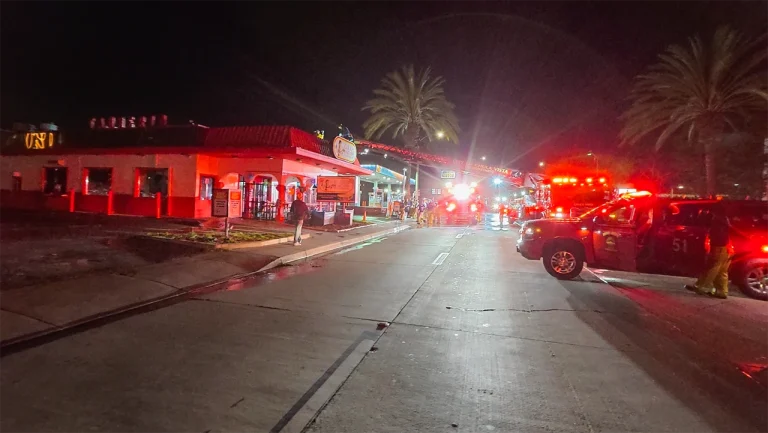
A fire broke out Saturday night at Chula Tacos, a beloved taqueria on H Street in Chula Vista, leaving the community shaken and the restaurant temporarily closed. The Chula Vista Fire Department responded quickly to the scene, where they found flames burning in the building’s attic.
Fire crews arrived to find smoke billowing from the popular taco shop and immediately began working to put out the blaze. After several minutes of intense firefighting efforts, they brought the fire under control at approximately 8:39 p.m. Thankfully, the flames didn’t spread to other parts of the building or nearby businesses.
The timing couldn’t have been worse for owner Rigo Munoz and his team. Munoz had stepped away briefly to celebrate Valentine’s Day with his wife when he returned to find his restaurant filled with smoke. “I started seeing smoke was coming out,” Munoz said. He immediately called 911 and rushed inside to evacuate customers and employees.
What makes this especially heartbreaking is that the restaurant had just opened at this location in late November 2025, only about two months before the fire. Munoz shared that Valentine’s Day was shaping up to be their best night yet since moving to H Street. The restaurant had recently started serving its popular carne asada, and customers were loving it. Business was finally starting to pick up.
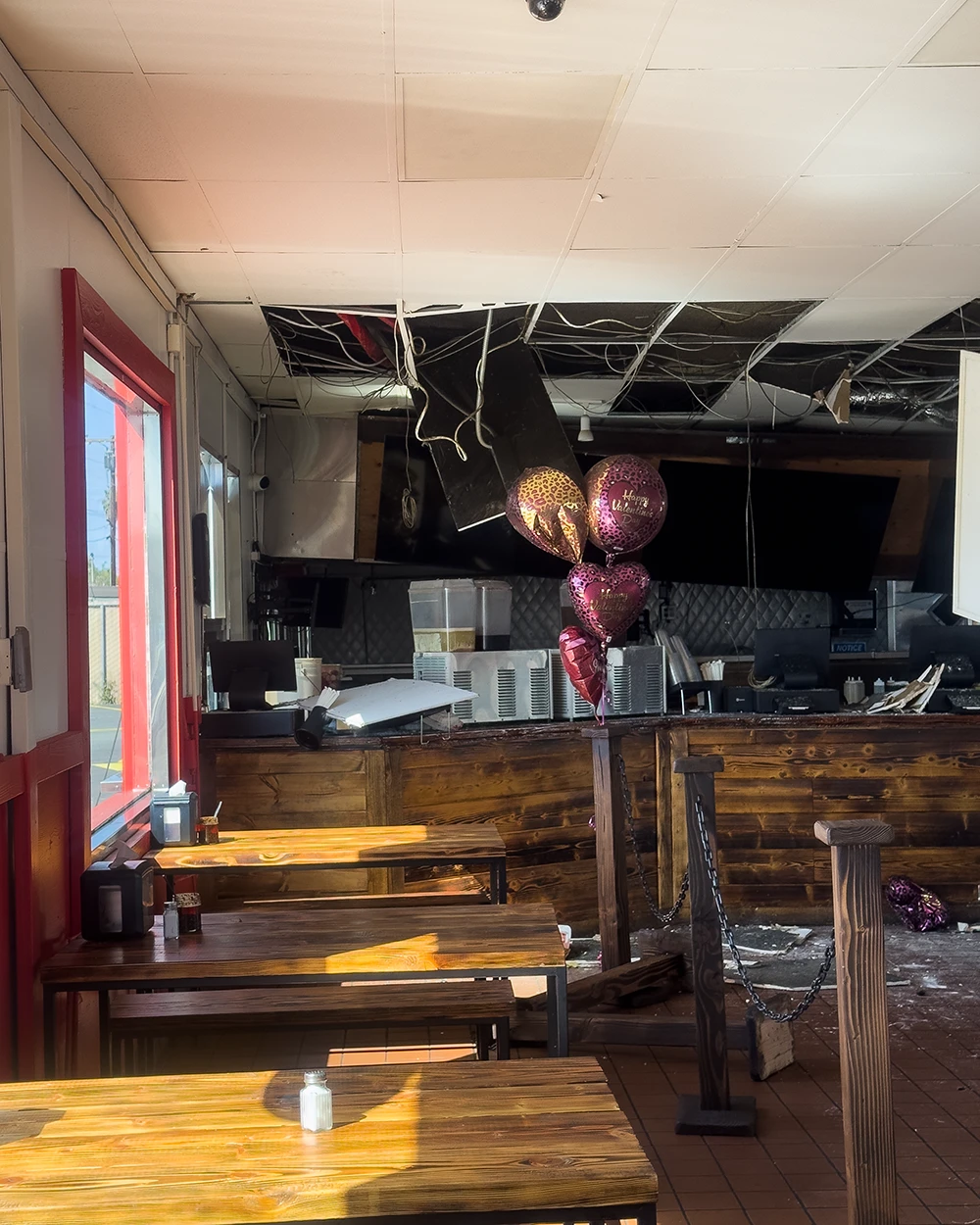
Valentine’s Day balloons were still inside Chula Tacos the next day after the fire. The ceiling will need extensive work before Chula Tacos can reopen.
One employee, a cashier, was taken to the hospital for smoke inhalation but has since returned home. Despite the scare, Munoz remained grateful. “I was sad, but in good spirits,” he said when discussing the fire. “I was thankful that no one was seriously hurt.”
The family-owned business has been around for eight years, making this location their newest venture. Now, Munoz is focused on caring for his employees during this difficult time. “We all have plans, and we all have budgets,” he explained, acknowledging the impact the closure will have on his team.
Even in the face of this setback, Munoz is choosing to stay positive. “There’s a great God in heaven that has everything under his control,” he said. The outpouring of support from customers, family, and friends has helped lift his spirits. “We certainly appreciate all the messages of support we’ve been receiving from our customers, our family, our friends. It’s really uplifted our morale in this moment. It’s a rough moment, so that really helps,” Munoz shared.
The cause of the fire remains under investigation by the Chula Vista Fire Department. Munoz is currently waiting for an insurance adjuster to assess the full extent of the damage. He estimates the H Street location will remain closed for about three months while repairs are made.
If you’ve ever enjoyed a meal at Chula Tacos or simply want to support a local family-owned business during a tough time, please send your love and prayers to Rigo Munoz and his family. They need our community’s support now more than ever. Follow us on Facebook to stay up to date on news about Chula Vista and get updates on when Chula Tacos will reopen their doors.
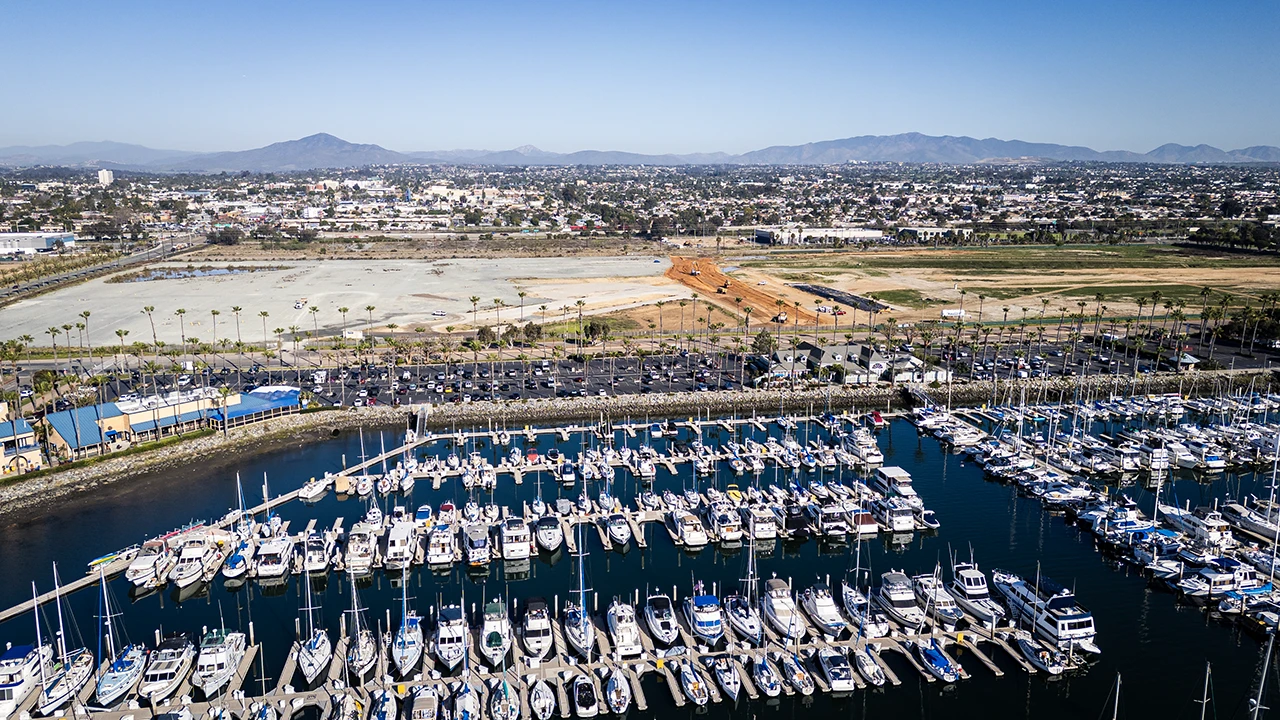
If you’ve driven near the water lately and thought, “Was all this here before?” you’re not alone. I’ve lived in Chula Vista for years, and even I sometimes do a double-take. The Chula Vista Bayfront Project is transforming the waterfront from a long, underused stretch of San Diego Bay shoreline into one of the most talked-about areas in the city.
For decades, this part of town felt more industrial than inviting. Fenced-off areas, empty lots, and missed opportunities. The Chula Vista Bayfront Project flips that story. Instead of forgotten land, we’re getting a lively waterfront with parks, resorts, homes, and space where the public can actually enjoy the bay.
This isn’t a small facelift. The Chula Vista Bayfront Project covers hundreds of acres and is rolling out in phases that will shape our city for decades.
The Resort That Put Us on the Map
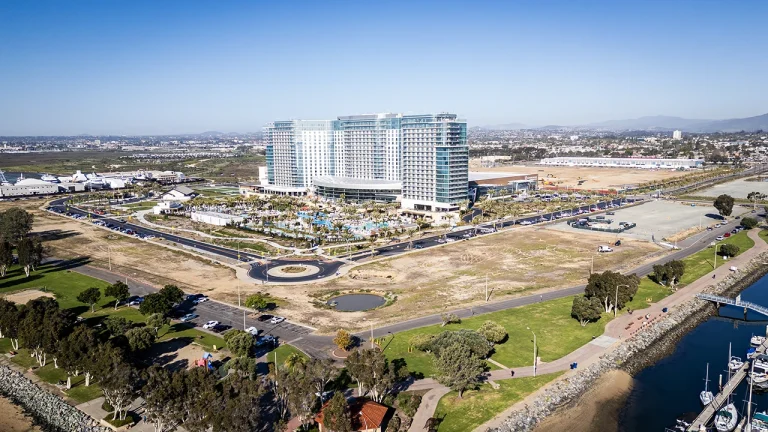
One of the biggest milestones came on May 15th, 2025, when the Gaylord Pacific Resort & Convention Center opened its doors. This isn’t just another hotel along the freeway.
We’re talking 1,608 rooms and suites, over 400,000 square feet of meeting space, multiple restaurants (including SoundWaves with bay views), pools, a spa, and full resort-style amenities. The development needed an anchor, and this is it. The resort is designed to bring large conventions and events to the South Bay, something that rarely happened before.
That means more visitors, more jobs, and more people discovering Chula Vista instead of just driving through it. Some come for work and come back later with their families. That’s the kind of long-term impact this project is built around. I have talked with people from out of town who are staying at the resort. Many of them didn’t even know where Chula Vista was before coming here. I hope the other projects encourage more people to get out and explore the area. Downtown Chula Vista has seen some visitor traffic, but not at the numbers everyone had hoped for.
Parks Are a Huge Part of The Chula Vista Bayfront Project
Whenever a major waterfront development is announced, people ask the same question: Do we still have access to the water?
The answer here is a solid yes. Over 70 acres of new parkland are included in the plan, built on top of existing open areas. That’s a lot of room for walking, biking, picnics, and those weekend “let’s get outside” moments.
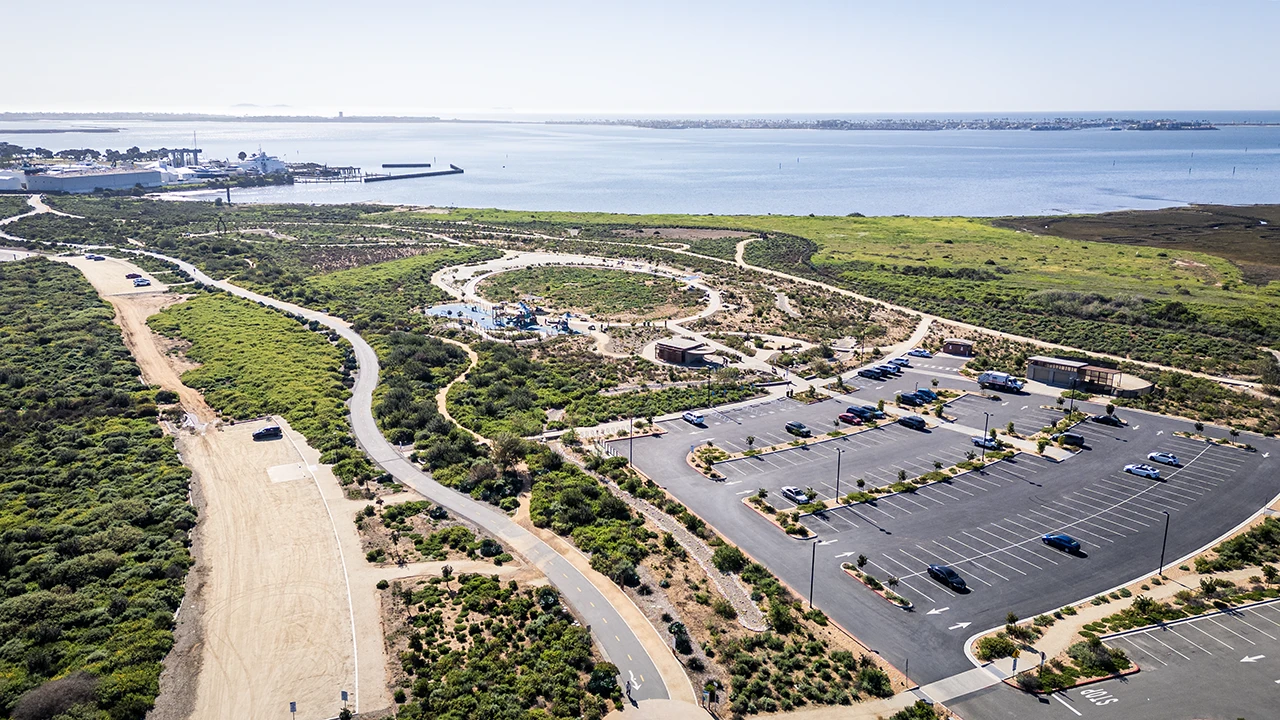
Sweetwater Park is already open near the resort, and it shows what this waterfront transformation is all about. Wide paths, open lawns, nature play areas, and views of the bay that remind you why living near the coast is such a big deal. I love walking in this park, especially early in the morning when everything feels calm, or later in the evening to catch the sunset over the water. I’ve seen so many families out there already and kids running around, people on bikes, couples just taking it all in. You can tell this space is already becoming part of people’s routines. I also can’t wait to see the trees fully mature over the next few years. Once they are filled in, this park will have even more shade and natural beauty.
Harbor Park is also being expanded with more playgrounds, splash features, and improved shoreline areas. Families, runners, dog walkers, and people who just want to sit and stare at the water all win here. We have covered this in another article and video. If you’re not already subscribed to our YouTube channel, be sure to give us a follow for more updates on the Chula Vista Bayfront Project and other updates.
So many families love the new Sweetwater Park at the end of E Street. I love going there for early morning walks. If you haven’t had a chance to visit the park, make sure you do.
Homes, Shops, and Everyday Life
This development isn’t just for tourists. Thousands of new housing units are planned, including condos and apartments near the water. Picture mixed-use buildings where ground floors have coffee shops, restaurants, and boutiques, while people live in the units above. It’s the kind of setup where you can walk downstairs for breakfast, head to work nearby, and meet friends for dinner without getting in your car.
One major residential plan includes around 1,500 homes over time. In a region where housing is tight, that kind of addition matters. It won’t solve everything, but it adds options close to jobs, parks, and transit.
Some of the development is planned near Blue Line trolley stops, which could help reduce car trips. In a place known for traffic, that’s a welcome idea. I’m hoping the trolley connection makes it easier to get to the waterfront without dealing with parking headaches.
The Reality of Construction
Let’s be honest, if you’ve been driving through this area, you’ve dealt with the detours, the cones, and the “Why is this lane closed again?” moments. I get it. It’s frustrating when your usual route becomes a maze, and it feels like the work will never end.
But here’s what’s happening behind those orange cones: roads, utilities, and flood control systems are all being upgraded to support new hotels, parks, and housing. This behind-the-scenes work isn’t glamorous, but it’s what keeps everything running safely long term. In the short term, it means some patience. Long term, it means a waterfront district that actually works. Most of the major infrastructure work should wrap up as the different phases are completed over the next several years.
The new Amara Bay Project is already ramping up. With so many projects here, I almost forgot about this one.
Why This Matters for Chula Vista
This project changes how people see our city. Instead of heading north for big events, resort experiences, or waterfront parks, more of that activity is coming here.
For locals, it means more places to enjoy the bay, more job opportunities (the Gaylord alone created over 1,000 permanent positions), and a waterfront that feels active rather than forgotten. It’s giving Chula Vista a new front door by the water—one that makes people want to stop and stay rather than just pass through.
I’ve watched this transformation unfold, and while the construction can be a pain, I’m excited about where we’re headed. The bay has always been there, but now we’re finally building a waterfront that lives up to it.
Have you checked out Sweetwater Park yet or driven past the resort? What do you think about the changes? I’d love to hear what other locals are noticing as this area continues to evolve.
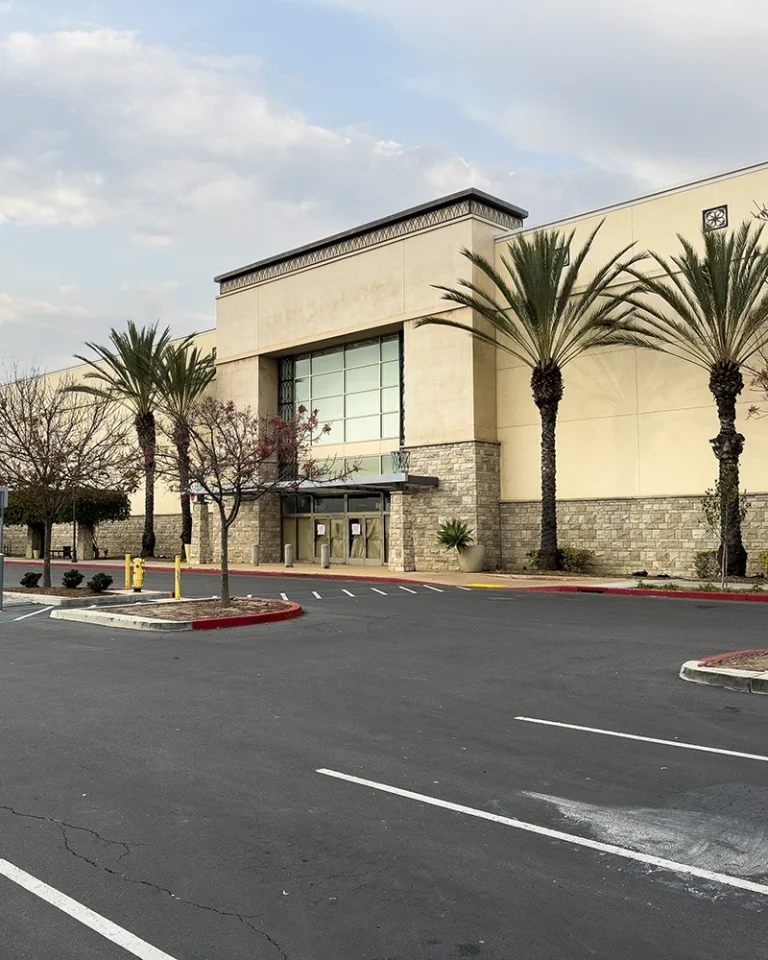
Ever since Macy’s closed up shop at Otay Ranch Town Center, the rumor mill has been working overtime. The latest buzz? Dave & Buster’s might be moving in. And honestly, I’m here for it.
Word on the street is that D&B is scouting locations in Chula Vista, so this isn’t completely out of left field. Nothing’s official yet, but a girl can dream, right?
Then there’s the Costco crowd (and let’s be real, that’s most of us). Sure, the space is there, but Costco without a gas station? That’s like chips without salsa—technically possible, but why would we do that to ourselves?
But here’s where my Instagram followers really came through with the good ideas: Why don’t we have a proper Hispanic or Asian market in Eastlake? Seriously, how is there no Northgate, Carnival, H-Mart, or Zion here? It’s 2025, people. This is a missed opportunity of epic proportions.
The Dave & Buster’s idea is getting plenty of love, though. Arcade games, wings, and questionable life choices on a Tuesday night? Sign me up.
What do YOU think should fill that space? Drop your ideas in the comments or hit me up on Instagram. Let’s manifest the Eastlake we deserve.
If your social media feed has been flooded with questions about paid parking at Otay Ranch Town Center, you’re not alone. After multiple readers reached out asking if the rumors were true, I visited the mall on Tuesday, January 27, and spoke directly with management. The answer: yes, paid parking is real—but it’s not quite what many people think.
There hadn’t been any official announcement, nothing in the news, and nothing prominent on the mall’s social media, which explains why so many shoppers were caught off guard.
How The Parking Fee Works
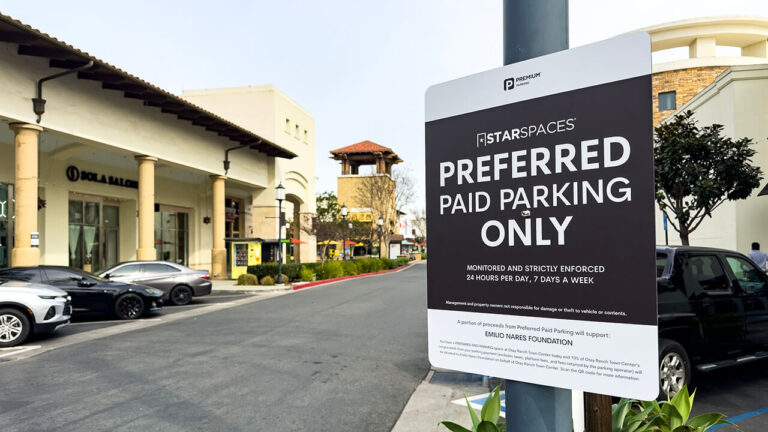
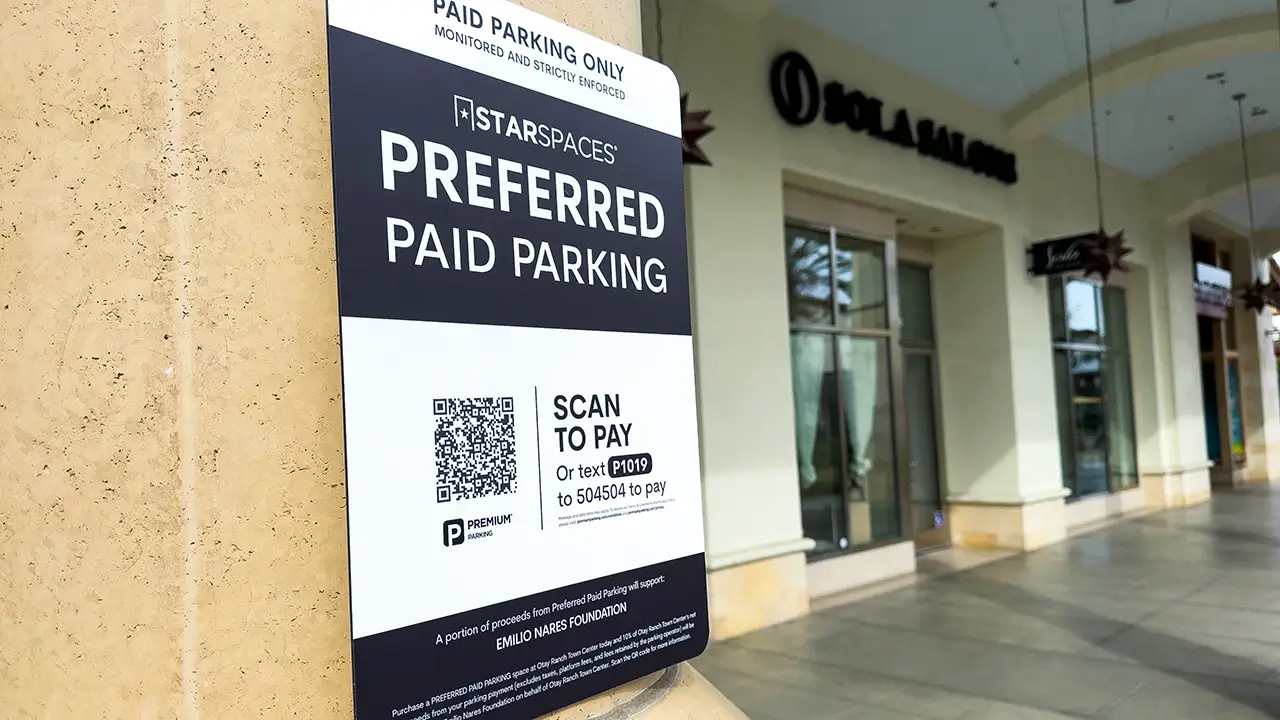
The spots in the center of the mall, closest to many storefronts, now cost $2 per hour. Customers pay by scanning a QR code posted near the spaces or through an app using their license plate number.
Here’s what many people are missing: this applies to approximately 2 percent of parking at the center. The remaining 3,665 spaces remain free. Handicap-accessible spaces and designated 5-minute pickup zones near certain stores are also unaffected by the new policy.
Right now, the mall is not issuing tickets if you don’t pay. Management confirmed they plan to enforce the policy with citations and fees in the future, but they have not yet announced a timeline or specific details about the penalties.
Now, if you park in the center of the mall, you will need to scan the QR code and enter your details to pay for parking. The fee is $2 an hour.
Why the Otay Ranch Town Center Did This
Management told me this has been an ongoing issue, especially in front of busy stores like the Apple Store. Employees were taking up many of those prime spots, and shoppers would sit and wait for a space to open, creating traffic backups in the center aisles. Security has had to increase patrols because people were parking in red zones or leaving their cars in no-parking areas while they ran inside “real quick.”
With more restaurants opening and bringing in heavier traffic, including the recently opened Yard House, the demand for those close spots has increased significantly. According to management, their goal is to increase turnover and keep traffic moving, rather than having people circle endlessly and block lanes.
This type of premium parking isn’t entirely new to Southern California malls, though it’s still relatively uncommon. A handful of shopping centers in Los Angeles and Orange County have experimented with similar programs, typically targeting their most convenient spots during peak shopping seasons.
Community Response (It has been negative)
The community reaction has been strong. Many residents are upset, and the confusion has only amplified the frustration. Some people initially thought the City of Chula Vista was charging the fee, but this has nothing to do with the city. Otay Ranch Town Center is a private property, and the ownership has the authority to make its own decisions about parking policies.
Others have said they’ll stop visiting the mall entirely, arguing that the center is already struggling and that adding fees will only drive more shoppers away. The frustration is understandable; no one likes unexpected fees, especially when they feel like they came out of nowhere.
At the same time, for shoppers willing to park in the outer lots, there are still plenty of free options just a short walk away. It’s worth noting that 10 percent of parking fees will be donated to the Emilio Nares Foundation, a local nonprofit that supports children battling cancer and their families.
What Happens Next, we will see
This policy just started this week, so we’re all watching how it plays out. It will be interesting to see whether it actually improves traffic flow in those busy center rows, how shoppers adjust their habits, and whether the mall follows through with enforcement measures.
Have you tried the premium spots yet, or are you sticking to the free lots? What do you think about this change? Head over to our Facebook page and share your thoughts. I’ll continue monitoring the situation and updating you as we learn more about how this change affects everyone who visits the mall.
Key Takeaways
Otay Ranch Town Center has started charging for a small group of premium front-row parking spaces
The change began Monday, January 26, 2026
Cost is $2 per hour, paid by QR code or app
Only about 2 percent of total parking spaces are affected—the rest remain free
Handicap spaces and 5-minute pickup spots remain free
10 percent of the fees will be donated to the Emilio Nares Foundation
Community reaction has been strong, with many expressing frustration and confusion
Mall management says the goal is to reduce traffic issues and improve turnover in high-demand areas