




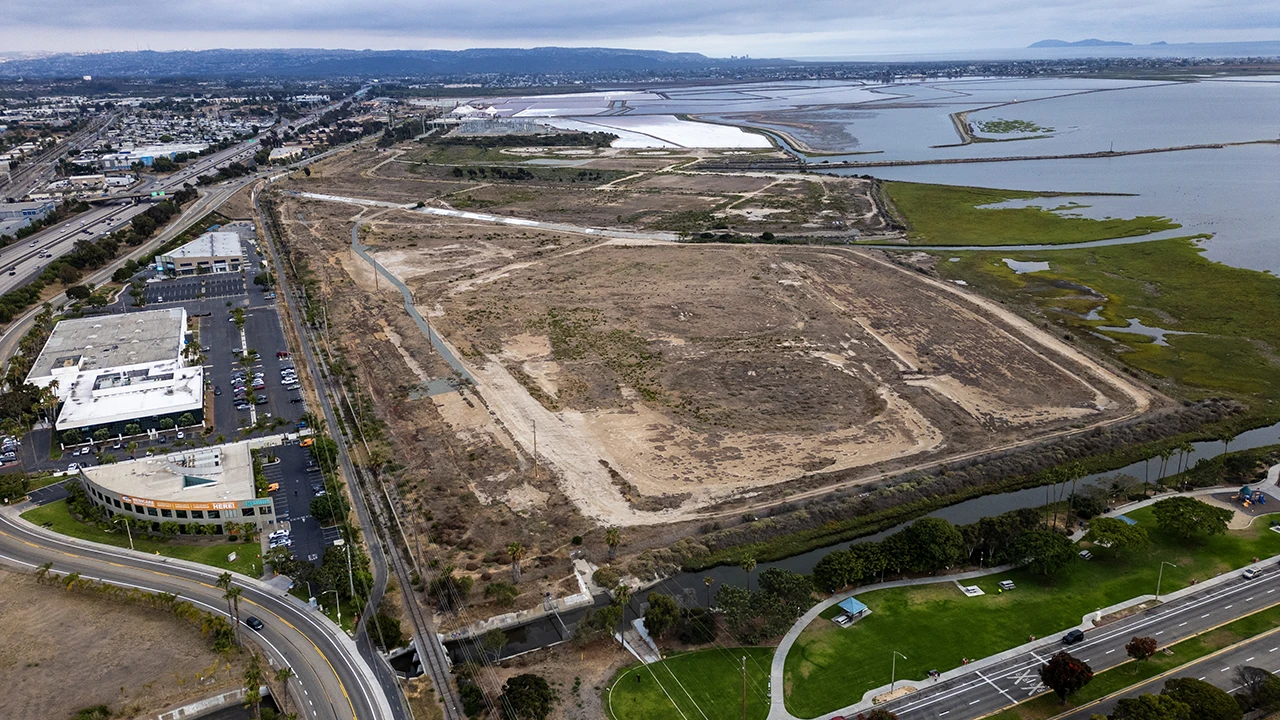
The Port of San Diego just gave the developers behind Pangaea Chula Vista another two years to pull this thing together. On Tuesday, Port commissioners unanimously approved a resolution authorizing staff to negotiate a new two-year exclusive negotiating agreement with two additional 180-day administrative extensions for Pangaea Development, LLC, the entity formed by The Divaris Group of Companies and The McGarey Group specifically for this project. Tucker Sadler Architects and Provident Resources Group round out the development team. Under the full terms, this agreement could stretch to nearly three years total if the administrative extensions are exercised, pushing the timeline into early 2029.
The biggest piece is still missing: a professional tennis player to anchor the entire development. And the fact that the competitive bidding process was waived under Board Policy No. 360 because this came in as an unsolicited proposal means that the land at 990 Bay Boulevard has essentially been taken off the market for a single developer, without any competing bids.
Let me be clear before I go any further. I am not against new development on the Bayfront. I have lived in Chula Vista for over 36 years, and watching the transformation that has already happened down there has been exciting. The opening of the Gaylord Pacific Resort was a milestone for this city. Sweetwater Park is beautiful. The ongoing work on Amara Bay and the other phases of the master plan is giving Chula Vista something it has long deserved: a waterfront that people actually want to visit.
But Pangaea is a different conversation entirely.
What Exactly Are We Talking About?
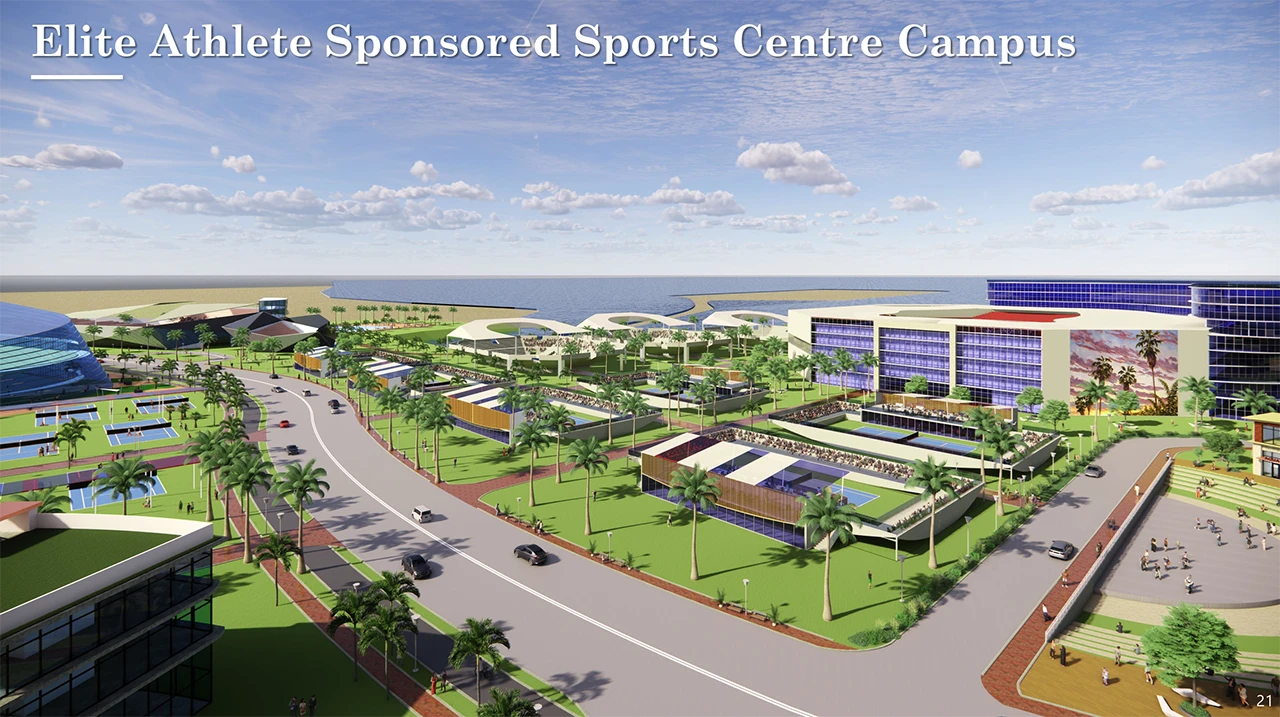
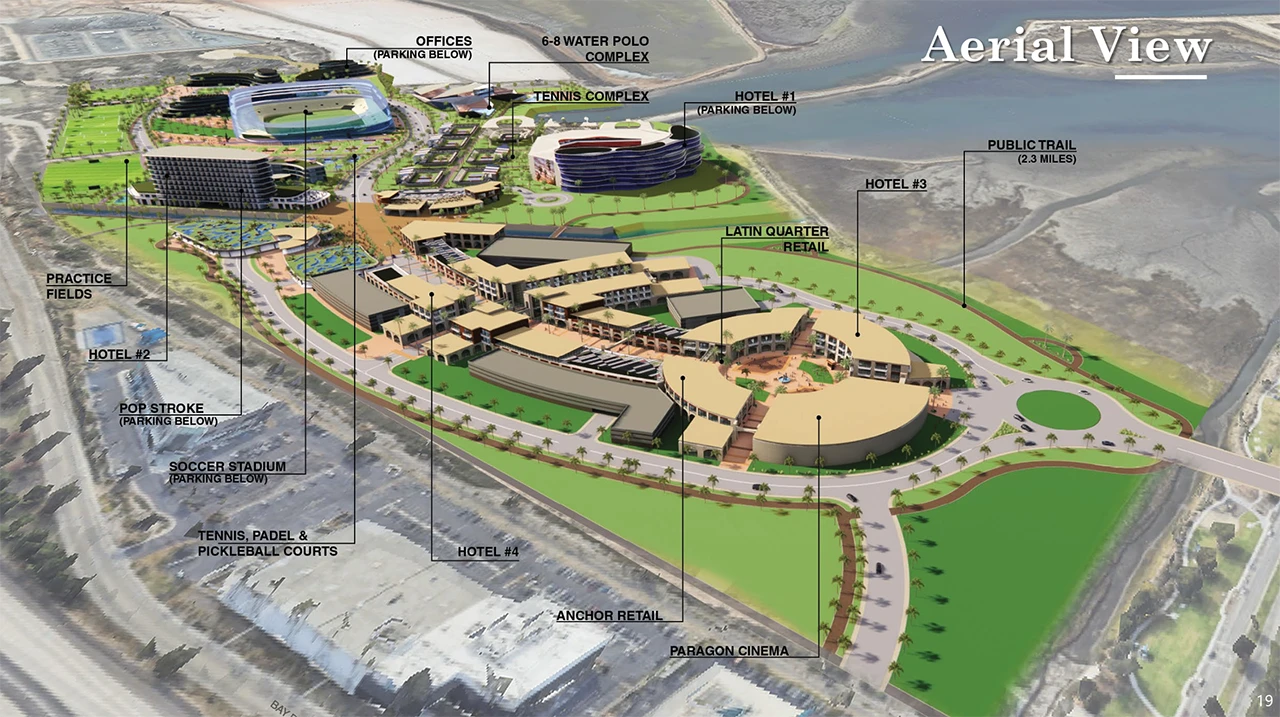
When this project was first unveiled last year, the scope was staggering. We are talking about 124 acres in the Otay District that would include a 50,000-seat stadium, three hotels with up to 700 rooms, a professional tennis center with up to 34 courts, a water polo academy, two golf courses, an IMAX theatre, and 300,000 square feet of retail and shopping space.
That is a small city within a city.
The plans also include supporting retail, dining, and wellness amenities that the developers say will “bring the water to the land and the land to the water.” It sounds ambitious. It also sounds like a project that demands serious scrutiny.
The Timeline Does Not Add Up
The original six-month ENA, which ran from January 1 through July 1 of this year, required the development team to hit several milestones. Among the most critical was securing a non-binding, public Letter of Intent with an elite professional athlete organization to be the face of the tennis facility. That did not happen.
What the developers delivered instead was a confidential letter from the athlete’s representatives in early June confirming that they are “strongly interested” and view Southern California as “one of the most relevant tennis and racquet sports destinations globally.” That language is encouraging, but it falls short of what was originally required. A confidential expression of interest is not a public Letter of Intent. After nearly a year of discussions, we still do not know who this athlete is, and there is no binding commitment of any kind.
The project-specific market demand study has not been completed either. The only analysis done so far is a preliminary study by JLL that focused narrowly on whether demand exists for tennis facilities in the region. It concluded that it does, and that tennis participation in Southern California has risen since the pandemic. But the broader market study evaluating the full scope of the development, the hotels, the stadium, the retail, the golf courses, none of that has even been commissioned yet because the project description is not finalized.
The developers have made progress in other areas. Pangaea Chula Vista signed a Memorandum of Understanding with the San Diego County Building and Construction Trades Council, AFL-CIO, and has indicated willingness to work toward an agreement with Unite Here Local 30. They have also engaged in early discussions around local hire plans and public outreach. But the two foundational elements, the athlete commitment and the market study, remain incomplete.
This Is a Phase 3 Site Being Fast-Tracked
Here is a detail that deserves more attention. The Otay District, where Pangaea would be built, is designated as Phase 3 of the Chula Vista Bayfront Master Plan. Phase 2 is not even finished yet. The Port’s own staff report states plainly that “there are no immediate plans to pursue the redevelopment of the Otay District as current efforts are focused on areas of the CVBMP that have current entitlements and are located adjacent to the recently completed Gaylord Pacific Resort and Convention Center.”
In other words, even the Port’s own planning framework does not anticipate the development of this area right now. The Pangaea team’s unsolicited proposal accelerated the timeline and was compelling enough that the Port waived competitive bidding to give them an exclusive window. I understand the reasoning. If a qualified development team shows up with a unique concept and a potential marquee athlete, you do not want to lose that opportunity. But fast-tracking a Phase 3 site while Phase 2 is still in progress raises real questions about whether we are getting ahead of ourselves.
The staff report also acknowledges that the existing entitlements for the Otay District require “a substantial amount of public infrastructure, including the construction of a 24-acre public park, roadways and utilities, and habitat buffers.” That is not a minor footnote. That is a massive infrastructure commitment that has to happen regardless of what gets built on this site.
The Real Issue Nobody Wants to Talk About
Before we even entertain the idea of a massive tennis facility, a 50,000-seat stadium, or anything close to that scale, the City of Chula Vista needs to take a hard look at the infrastructure in this area right now.
If you have ever driven to the Bayfront during a busy time, you know exactly what I am talking about. Both of the main freeway entrances into this area, off E Street and H Street, are already congested. The trolley crossings back things up. The traffic from the Gaylord alone has added pressure on roads that were not designed for this volume, especially during events and weekends. And that is with just one major resort open. Now imagine adding a 50,000-seat stadium and tens of thousands of visitors on top of that.
The roads, the intersections, the freeway on-ramps and off-ramps in western Chula Vista were built for a different era. We cannot just keep stacking massive developments on the Bayfront without addressing what is already struggling. Anyone who has sat at the E Street or H Street trolley crossings during rush hour, watching the light cycle while traffic backs up toward the freeway, knows this is not a minor inconvenience. It is a systemic problem that gets worse with every new project.
The city has launched a free Bayfront Shuttle connecting the waterfront to the E Street and H Street trolley stations, which is a good step. But a shuttle service is not a substitute for the kind of roadway and freeway access improvements this area needs before we start talking about stadiums and entertainment districts.
The Stadium Fantasy
I know there are a lot of people in Chula Vista, and honestly across San Diego, who would love to see an NFL team land here. I get it. The idea of a professional football stadium on the Bayfront sounds incredible on paper. But we need to wake up and be honest with ourselves. That is not going to happen. The NFL is not coming to Chula Vista. That is not the future of this area, and building our expectations around that kind of fantasy only distracts from the real planning this community needs.
If we are going to talk about a stadium, a soccer arena would make far more sense for this region. We are a border community with deep cultural ties to the sport. The fan base is already here. Youth soccer participation across the South Bay is massive. That is a much more realistic conversation than chasing an NFL franchise that has shown zero interest in coming here.
Slow Down and Get It Right
The Sierra Club’s deputy director, Charles Rilli, raised concerns at the Port of San Diego meeting about the lack of public outreach and the environmental impact on the surrounding wetlands and marshland. Other speakers pointed out that this kind of development caters to higher-income visitors and does not necessarily serve the residents who actually live here. Those are valid concerns that deserve real answers, not just reassurances that the negotiating agreement “does nothing to move the project forward.”
The Port’s staff report makes clear that any project on this site would require a Port Master Plan Amendment, full environmental review under CEQA, and potentially California Coastal Commission approval before construction could begin. That is a long road, and it is the right process. But two more years of exclusive negotiations mean nothing if the fundamental infrastructure problems around the Bayfront are not addressed in parallel.
I appreciate that Port chair Ann Moore acknowledged the environmental questions and said the extension only buys time for planning. I appreciate that the staff report frames this as an opportunity to advance planning on a site that was not expected to be developed for years. But you cannot plan a world-class entertainment district on top of roads and intersections that are already failing the people who live here today.
I want the Bayfront to succeed. I want Chula Vista to become the destination city that so many of us believe it can be. But getting there means being honest about what we need to fix before we start adding more. Fix the roads. Improve the freeway access. Address the trolley crossing bottlenecks. Build out the 24 acres of parkland, the roadways, and the utilities that even the Port says this site requires. Upgrade the infrastructure so it can actually support the vision.
Then we can talk about Pangaea Chula Vista.

